

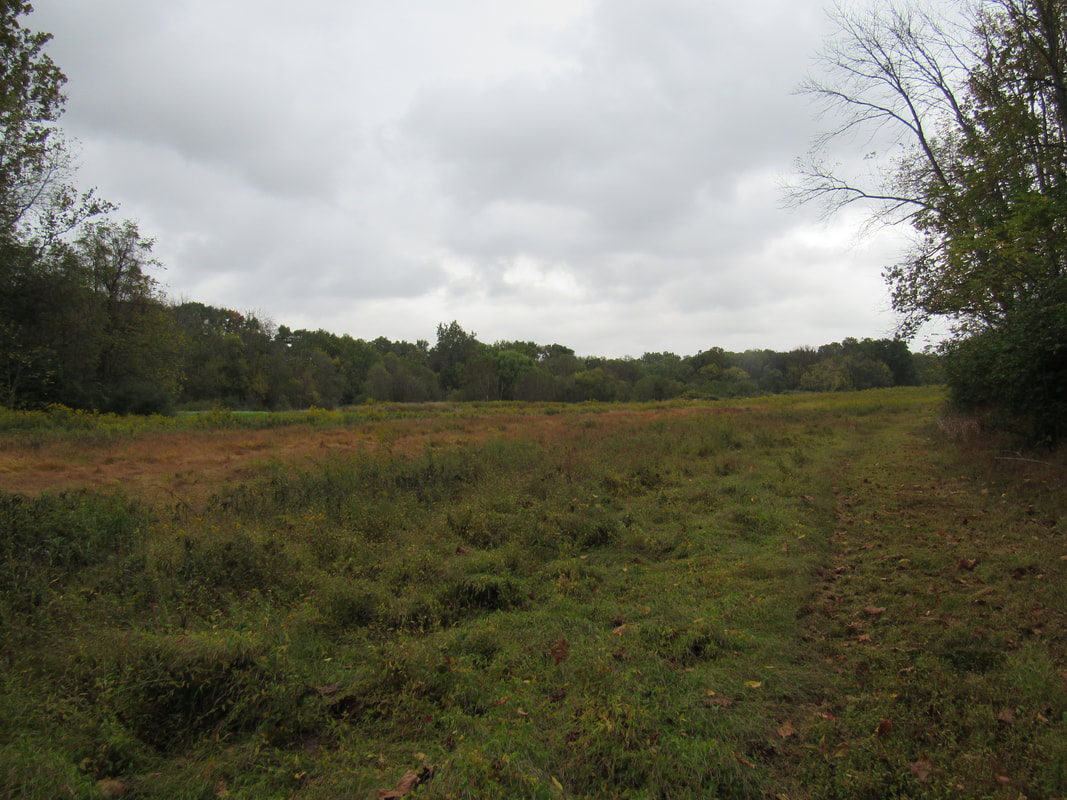

Indian Rock Dam Game Lands — State Game Lands 416
Property Owner: U.S. Army Corps of Engineers
Wildlife Management: Pennsylvania Game Commission — State Game Lands 416
Location: York New Salem/Spring Grove area, York County
Size: 1,558 acres
Restrooms: No facilities are available at the birding access points.
Accessibility: Easy to moderate. SGL 416 is particularly well suited to short birding visits of an hour or less. None of the locations described here requires a long hike, and productive birding often begins immediately at the parking area. Woodberry offers the longest recommended walk, descending through a wooded creek valley before reaching open fields. Some field paths elsewhere in the Game Lands are periodically mowed but can become tall or overgrown during the growing season.
Safety Reminders: This is actively hunted State Game Land. It is required by law to wear fluorescent orange hat and vest when you are in gamelands from November 15-December 15th. First Sunday of rifle season is open to hunting do not go birding on this date. Ticks are common in fields and brushy areas; use repellent and check carefully after your visit. Do not drive beyond gates or onto closed Game Commission roads. Because the property serves as the flood-storage area for Indian Rock Dam, low-lying roads and portions of the Game Lands may occasionally flood or be closed following periods of high water.
Parking: Numerous small parking areas and roadside access points are scattered throughout SGL 416. This guide highlights Sunnyside Road, Woodberry Road, and Graybill Road as three especially worthwhile stops. Old Joseph Road, Trinity Road, and W. College Ave provide additional opportunities for exploring the Game Lands.

Description
State Game Lands 416, also known as the Indian Rock Dam, Codorus Creek, or York New Salem Game Lands, protects 1,558 acres of fields, shrubland, wetlands, creek corridor, and woodland west of York. SGL 416 is somewhat unique among Pennsylvania State Game Lands. Rather than being state-owned, the property originated as part of a federal flood-control project and is owned by the U.S. Army Corps of Engineers, with much of the land managed for wildlife by the Pennsylvania Game Commission. Despite its size and proximity to York, it remains a relatively hidden and lesser-known public-access area.
Following the devastating 1933 Codorus Creek flood, Congress authorized Indian Rock Dam in 1936, and the U.S. Army Corps of Engineers completed the project in 1942. Indian Rock is a dry flood-control dam: under normal conditions Codorus Creek flows through the project, but during major floods water can be temporarily stored across the broad valley upstream. The flood-control reservoir can hold approximately 9.1 billion gallons of water. Much of this federally owned flood-storage area is managed for wildlife by the Pennsylvania Game Commission as SGL 416. The result is a diverse patchwork of grass and forb fields, brushy early-successional habitat, hedgerows, seasonal wetlands, riparian woodland, mature forest, and Codorus Creek.
The landscape is actively managed and changes over time. The Indian Rock management plan identifies approximately 350 acres for prescribed-fire management. Burning and other habitat-management practices help prevent some open areas from developing into continuous forest while encouraging grasses, wildflowers, shrubs, and young growth. This shifting mixture of habitats supports an equally diverse bird community.
Birding Suggestions
Unlike a park with a developed trail network, SGL 416 is best explored as a series of short birding stops. Each access point provides a somewhat different combination of habitats, and all can be worthwhile even when you have only a short time to bird.
Site 1 — Sunnyside Road: Meadows, Wetlands & Codorus Creek
→ eBird Hotspot Page
The Sunnyside Road lot is the best-known birding location within SGL 416 and the site featured in the original York County Birding Trail. Its combination of meadow, hedgerows, seasonal wetland, mature trees, and Codorus Creek produces an impressive variety of birds. The eBird hotspot has documented 160 taxa.
Birding Suggestions
Begin birding as soon as you park. Explore the fields and hedgerows west of Sunnyside Road and check the mature trees surrounding the openings.
- During spring and summer, look and listen for Willow Flycatcher, Indigo Bunting, Eastern Towhee, Common Yellowthroat, Field Sparrow, Gray Catbird, and other birds of open and shrubby habitat. Willow Flycatcher is particularly well represented in the site's eBird records.
- The mature trees and woodland edges can be excellent for migrant warblers and vireos. Woodpecker diversity is also unusually good; Red-headed Woodpecker has been recorded repeatedly in addition to the more common woodpecker species.
- Pay particular attention to the low wet area near the parking lot. Depending on recent rainfall, it can range from nearly dry to shallow standing water. When flooded, it has produced Wood Duck, Hooded Merganser, Wilson's Snipe, Solitary Sandpiper, and even Sora, along with other migrant waterbirds.
- Walk along Sunnyside Rd toward the bridge and check Codorus Creek for Wood Duck, Great Blue Heron, Green Heron, Belted Kingfisher, and other creekside birds. Wood Duck is recorded regularly here from late winter through summer.
- In winter and during migration, carefully work the fields and brush for sparrows and other open-country birds.
Site 2 — Woodberry Road: Creek Valley, Woodland & Fields
→ eBird Hotspot Page
The Woodberry Road lot offers perhaps the most complete birding walk within SGL 416 and can easily occupy an hour or more if you follow the trail all the way through the wooded valley to the open fields.
Birding Suggestions
From the parking area, take the trail downhill into a forested creekside valley. Bird slowly on the descent—the sheltered woods and stream corridor provide some of the best woodland habitat among the recommended locations.
- Check the creek and quiet pools for Wood Duck, which has been recorded repeatedly here in spring.
- During migration, carefully work the wooded valley for warblers, vireos, thrushes, and flycatchers. Records include Wood Thrush, Acadian Flycatcher, Eastern Wood-Pewee, Great Crested Flycatcher, and several vireos.
- Watch dead trees, snags, and open portions of the woods for Red-headed Woodpecker, which has been recorded here repeatedly.
- Eventually the route emerges into open fields and brushy edge habitat. The bird community changes noticeably here. Look for Field Sparrow, Eastern Towhee, Indigo Bunting, Common Yellowthroat, and Yellow-breasted Chat. Both Baltimore and Orchard Orioles are also well represented in the eBird records.
The open fields along Indian Rock Dam Road near the Woodberry lot have been a reliable location for American Woodcock in late winter and early spring. The eBird data strongly support this, with Woodcock reported repeatedly during its late-winter/early-spring display period.
Visit around dusk from late February through March and listen for the male's nasal “peent” followed by its spiraling aerial display.
Site 3 — Graybill Road: Woodland, Field & Forest Edge
eBird Hotspot
The Graybill Road pull-off is a less-established birding location but provides convenient access to another useful combination of habitats.
There are two parking areas along Graybill: one is a parking lot surrounded by an open field, the other is a pull-off in a wooded area on the north side of Graybill. The parking lot area borders an open field, so spend some time scanning before entering the woods. During migration and winter, watch for open-country raptors. The habitat has potential for Northern Harrier, and the broad fields are also worth checking around dusk for Short-eared Owl, particularly during the colder months. These should be considered possibilities rather than expected birds.
From either parking spot, walk along Graybill briefly to a pull-off area with a yellow gate. Walking down this gated road (Old Joseph Rd) goes through fields with well established hedgerows that can be productive.
From the wooded pull-off area, a short trail on the north side of Graybill Road enters woodland. The route isn't long, making this another excellent place for a quick 30–60 minute stop.
Birding Suggestions
- During spring and fall migration, walk the wooded section slowly and listen for warblers, vireos, thrushes, and flycatchers.
- Records from the limited eBird coverage include Wood Thrush, Eastern Wood-Pewee, Great Crested Flycatcher, and Red-eyed Vireo, along with several woodpeckers.
- Red-headed Woodpecker has been found here on multiple visits and is worth watching for around mature trees, snags, and more open woodland.
- Around the woodland edges and more open areas, listen for Field Sparrow, Eastern Towhee, Common Yellowthroat, Indigo Bunting, and other edge birds.
Additional Areas to Explore
Old Joseph Road
Old Joseph Road provides a particularly interesting option for birders who don't mind rougher access. The road is rugged and and eventually dead-ends at the former Codorus Creek crossing, where there is ample place to park. If you park near the old creek crossing, you can retrace your path and walk along the road that you drove on...…or you can continue walking along Old Joseph Road away from the creek until reaching the powerline corridor. This provides another habitat transition worth exploring.
Trinity Road
The Trinity Road lot, near the Graybill Road intersection, provides another convenient place for a short check of fields, brush, and woodland edge. In late fall and winter, there can be a good sparrow diversity, including Field, American Tree, Fox, White-crowned, White-throated, Song, Lincoln's, and Swamp Sparrows. Indigo Bunting, Common Yellowthroat, Eastern Towhee, and Gray Catbird further reflect the early-successional habitat, while several woodpeckers and migrant woodland birds have also been recorded. Scan the fields for Northern Harrier in the winter.
W. College Ave
You can access the area on either side of W College Ave. There is a short loop you can take on the south side of the road which borders a field with a wooded river corridor area. On the north side of W. College Ave (the parking lot side), there is a larger field area that can be explored.
Best Seasons
- Spring (March–May): Excellent. Begin with American Woodcock around Woodberry in late winter and early spring. As April and May progress, migrant warblers, vireos, thrushes, and flycatchers move through the wooded corridors, while flooded areas at Sunnyside can attract ducks, shorebirds, and rails.
- Summer (June–July): Excellent for breeding birds of fields, shrubland, woodland edge, and riparian habitat. Look for Indigo Bunting, Common Yellowthroat, Field Sparrow, Eastern Towhee, Yellow-breasted Chat, and orioles. Woodberry and Sunnyside provide particularly good opportunities to experience several habitat types in one visit.
- Fall (September–October): Excellent for migrant songbirds and sparrows. Concentrate on hedgerows, woodland edges, riparian trees, and brushy field margins. Old Joseph and Trinity can be particularly interesting for sparrows.
- Winter (November–February): Although quieter overall, the extensive fields make SGL 416 worth checking for sparrows and open-country raptors. Scan the larger fields around Graybill and elsewhere for Northern Harrier and the possibility of Short-eared Owl, while Codorus Creek and flooded areas can continue to produce waterbirds.